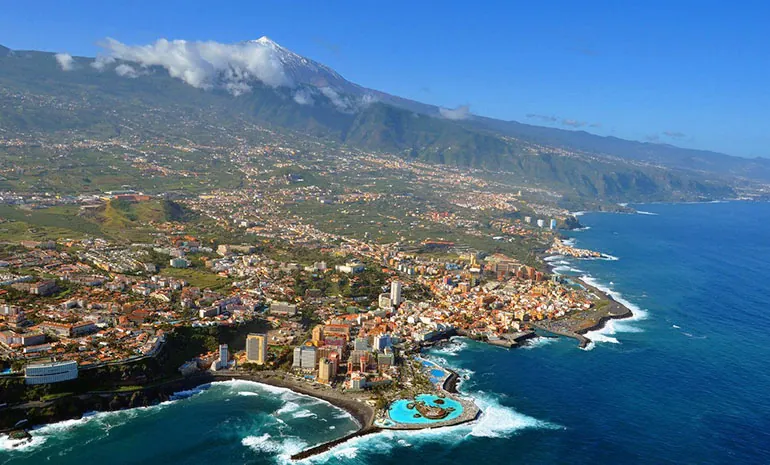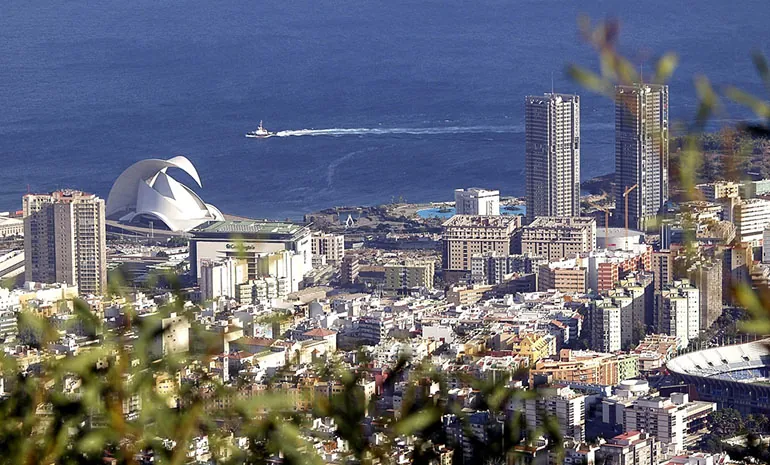
Santa Cruz (population 205,000) lies in the north of the island and is the capital of Tenerife and, together with Las Palmas de Gran Canaria, of the entire Canary Islands archipelago. It is one of the most important tourist ports in Spain. The city takes its name from the Holy Cross of the conquistadors led by Alonso Fernández, who had a wooden cross erected after landing on the beach at Añaza in 1494. Its well-known commercial port can handle cruise ships, oil tankers and large container ships, driving economic development across the whole of Tenerife.
The city has a well-laid-out historic centre with pedestrianised streets and plenty of bars, traditional restaurants and shops. It’s the ideal place for a relaxing stroll, discovering the many historic buildings that bear witness to the city’s past, and for picking up mementos and typical local souvenirs.
Not to be missed is the Santa Cruz Carnival, one of the most famous in the world. While the carnival is on, numerous events are held in towns all over the island, including parades, concerts and parties. Immerse yourself in its magic and you’ll get a taste of the festive joy of this major folk celebration.
Places of interest
- Auditorio de Tenerife: a spectacular piece of architecture shaped like a cobra’s head, designed by the brilliant architect Santiago Calatrava.
- Parque Marítimo César Manrique: a superbly equipped park with swimming pools, fitness facilities and shops. Located on Avenida de la Constitución, it lies right next to the Auditorio.
- Museo de la Naturaleza y el Hombre: the main archaeological museum in the Canary Islands, located on Calle Fuente Morales.
- Tenerife Espacio de las Artes: an architectural complex covering around 20,622 square metres, home to the contemporary art museum and the municipal library.
- Teatro Guimerá: the famous historic theatre of Santa Cruz, which opened back in 1851. You can check the programme on the official website www.teatroguimera.es
- Iglesia de la Concepción: the city’s most important church, built in 1500 and dedicated to the Immaculate Conception.
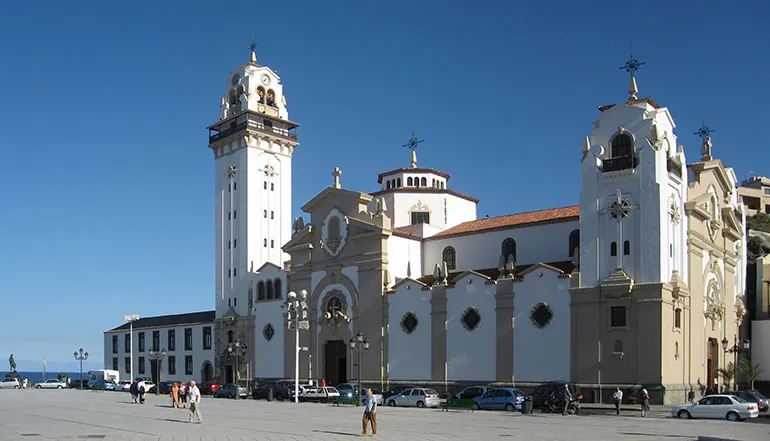
- Basilica of Our Lady of Candelaria: the foremost Marian shrine in the Canary Islands and one of the most visited sanctuaries in the archipelago and in the whole of Spain.
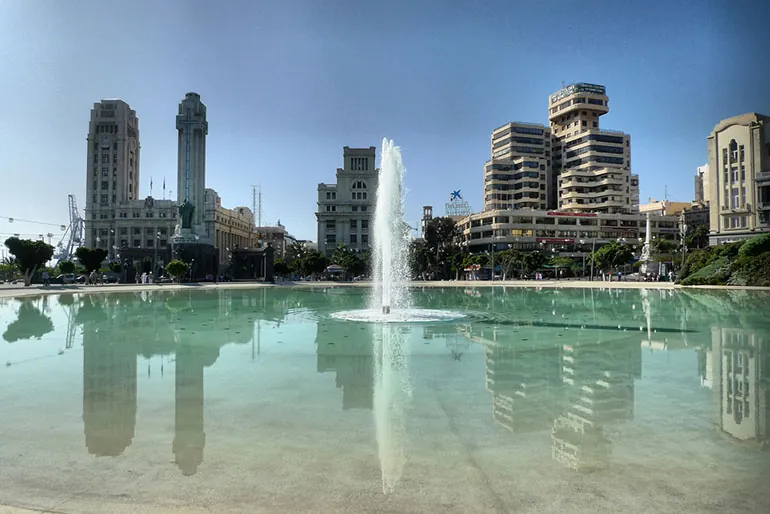
- Plaza de España: the nerve centre of the city during the carnival celebrations.
- Parque García Sanabria: a park with countless plant species and a large collection of sculptures.
- Parque de la Granja: built between 1969 and 1976 over an area of 64,000 square metres, it is one of the largest urban parks in the Canary Islands.
- Playa de Las Teresitas: famous for its golden beach, which stretches for about a kilometre.