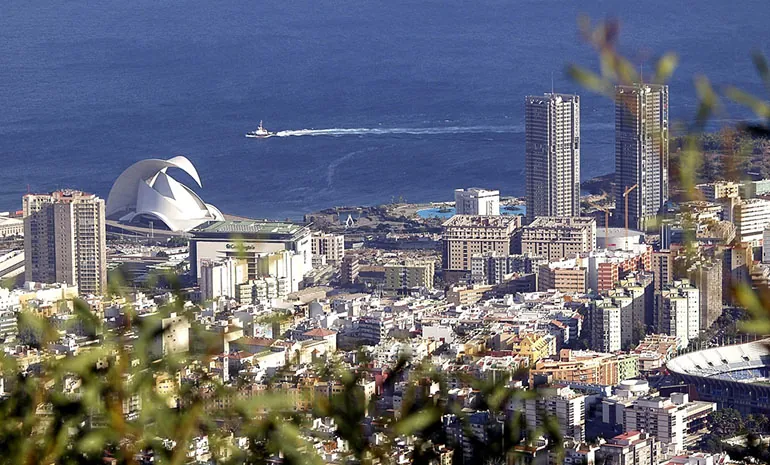
Tenerife is the largest island in the Canary Islands archipelago (made up of seven main islands: Tenerife, Fuerteventura, Gran Canaria, Lanzarote, La Palma, La Gomera and El Hierro). Located in the Atlantic Ocean, off the north-west coast of Africa, it is one of Europe’s outermost regions. It covers an area of 2,034.38 km² and has a population of around 910,000. The capital is Santa Cruz de Tenerife which, with around 205,000 inhabitants, is the largest and most populous city on the island.
Visited by around 5 million tourists a year, Tenerife, the island of eternal spring, is a fascinating place, both for its natural environment and for its culture. Its distinctive oceanic subtropical climate (it has been described as one of the places with the best climate in the world, with an average annual temperature of 21°C) attracts millions of visitors all year round.
There are many noteworthy towns and resorts; the most important include:
- Santa Cruz de Tenerife – the capital, and one of the most important tourist ports in Spain
- Puerto de la Cruz – one of the trendiest resorts on the island
- La Orotava – the municipality that is home to Teide National Park
- San Cristóbal de La Laguna – considered the cultural capital of the Canary Islands and declared a World Heritage Site by UNESCO
- Candelaria – a centre of pilgrimage, home to the Basilica of Our Lady of Candelaria (patron saint of the Canary Islands, celebrated on 15 August)
- Güímar – famous for its distinctive pyramids
- El Médano – a paradise for surfers, with Montaña Roja close by
- Garachico – home to the remarkable natural pools of El Caletón de Garachico
- Costa Adeje – one of the areas most visited by tourists
- Los Gigantes – famous for its giant cliffs
- Masca – a small, picturesque village set in enchanting scenery
- Costa del Silencio – famous for its distinctive little coves among the rocks; a hike up nearby Montaña Amarilla is recommended
- Playa de las Américas – the island’s round-the-clock entertainment hub
- Los Cristianos – one of the most popular resorts in Tenerife, with a port that is well worth seeing
- Santiago del Teide – famous for the Mirador de Cherfe and Mirador de Archipenque viewpoints, which look out over enchanting landscapes
- Arona – known for the Parque Central de Arona, designed by architects and biologists, with a collection of tropical palms and native rocks
- Icod de los Vinos – home to the famous thousand-year-old dragon tree, El Drago
- Tacoronte – famous for its many vineyards producing Tacoronte-Acentejo wine
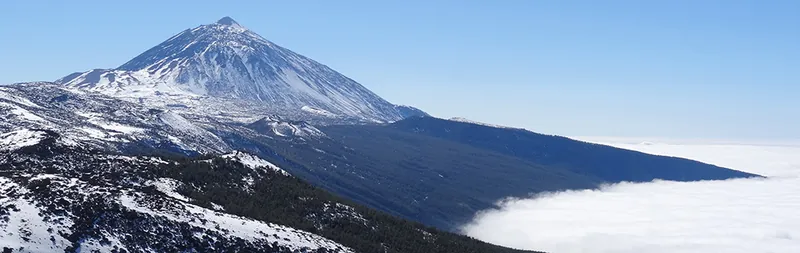
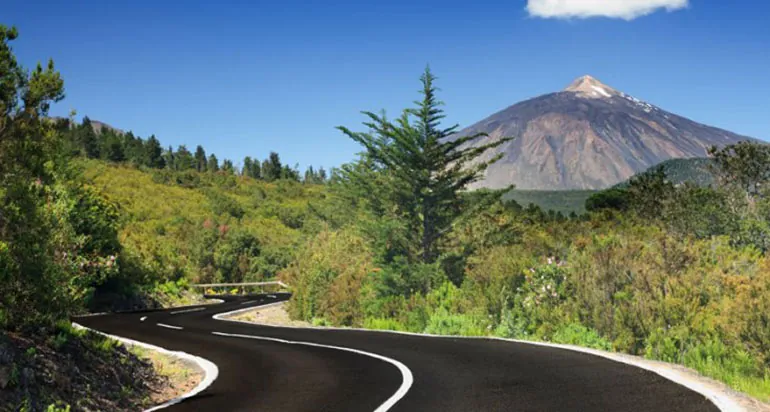
- Teide National Park – a still-active volcano 3,718 metres high (the highest peak in Spain), famous for its distinctive lunar landscape and declared a World Heritage Site by UNESCO
These are Tenerife’s main theme parks and leisure parks:
- Siam Park – water park in Costa Adeje – Phone 34 822 07 00 00
- Monkey Park – in Los Cristianos – Phone 34 922 79 07 20
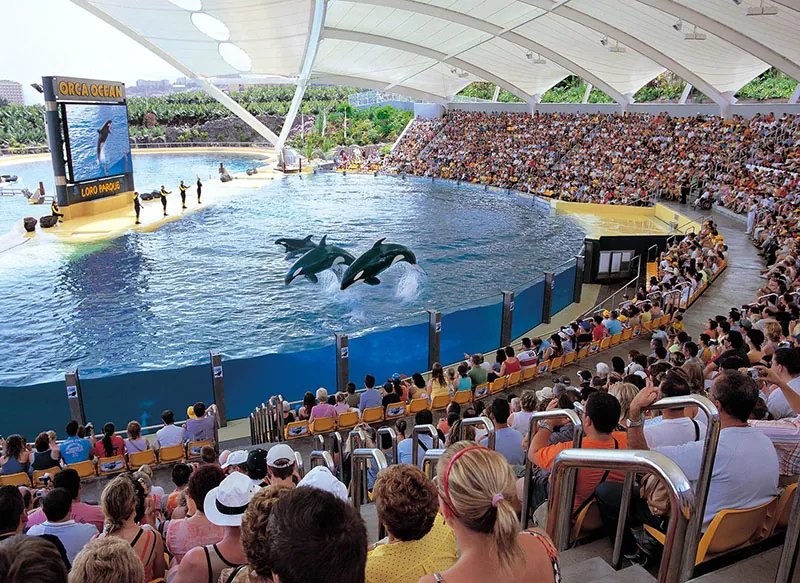
- Loro Parque – in Puerto de la Cruz – Phone 34 922 37 38 41
- Camel Park – in Los Cristianos – Phone 34 922 72 11 21
- Jungle Park – in Arona – Phone 34 922 72 90 10
- Parque Exóticos – in Arona, near Los Cristianos
- Aqualand – in Costa Adeje – Phone 34 922 71 52 66
- Pueblo Chico park – in La Orotava
- Botanical Garden – in Puerto de la Cruz – Phone 34 922 92 29 78
- Mariposario del Drago – in Icod de los Vinos – Phone 34 922 81 51 67
- Teide National Park – Phone 34 922 92 23 71
- Cueva del Viento visitor centre – in Icod de los Vinos – Phone 34 922 81 53 39
- Lago Martiánez – in Puerto de la Cruz – Phone 34 922 38 59 55
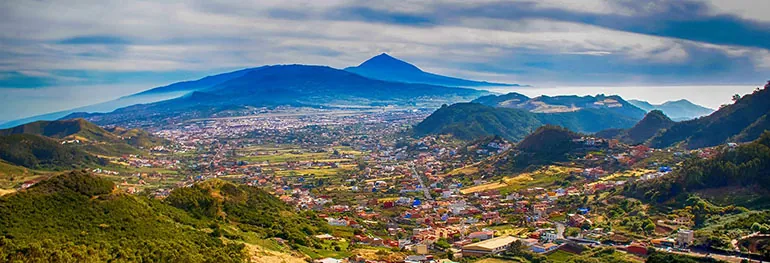
Thanks to its unusual climate, Tenerife can be considered a “miniature continent”, stretching from the ocean through the hills to the high mountains. Flora and fauna are well represented: you’ll find countless varieties of plants, flowers and fungi, and most animal species. This “miniature continent” is divided in two by the Teide mountain range: the fertile, green, wooded north and the drier, more tropical south. Volcanic in origin, the island offers an enchanting variety of landscapes, from the magnificent summit of Teide to the fantastic, distinctive beaches facing the ocean, the green hills of La Orotava, the spectacular giant cliffs of Los Gigantes and the small, charming village of Masca, with breathtaking trails leading right down to the ocean.
Tenerife is an island to be lived to the full, a place to reconnect with your roots: to let the wind caress your skin and tousle your hair, to hear the roar of the waves and the murmur of the surf, to breathe in the unmistakable smell of the sea, to admire the sun shimmering on the water and to enjoy walking barefoot along the shoreline or hiking the trails through Teide’s lunar landscape. Emotions that turn into poetry as you experience the magic of an enchanting place cradled by the ocean: Tener…ife – Tener…Life – the island to live and to reconnect with your roots…
Photo gallery